
Tag Archives: signs and miracles

How do we know that GOD IS NOT EVIL OR ESSENTIALLY WRATHFUL?

How do we know for a certainty that God is not ultimately evil?

Answer:  The Cross and Resurrection of Jesus, the Messiah, God’s own Son.  The very allowing—in fact appointing!—of the Cross, Christ’s participating in suffering abuse, like us, in connection with the complete reversal and superabundant overcompensation of that unequalled evil via resurrection from among the dead, all prove irrefutably that God is ultimately, in the final analysis…in the Last Judgment, just and good.  And He’s on our side!  [3/9/03; 7/27/07]

What’s more, we also know the ultimate love and goodness of God by the Spirit that He has put in our hearts when we believe.  (Romans 5:5)  [3/9/03]

Our Lord Jesus Christ has given us:

  1. God’s precepts to keep, directing us to maturity
  2. God’s promises that raise hope, motivating us to endure
  3. God’s power through His Holy Spirit, helping us obey
  4. God’s pardon for our misdeeds, cleansing our conscience

What more do we need to inspire us to advance toward genuine human maturation as worthy citizens of His Kingdom?  [3/18/03; 9/16/25]

There wasn’t enough blood in all the cattle and sheep and doves of ancient Israel to cleanse, in addition to the priests, Levites, and sanctuary with all its furnishings and utensils, also the other eleven tribes plus all their houses, buildings, possessions, storehouses, livestock, orchards, vineyards, etc., etc., much less to do that gigantic task every daySuch culture-wide wholesomeness is only possible in wake of the New Covenant with the overwhelming outpouring of the Spirit of wholesomeness resulting from Messiah’s sacrifice and outpouring of his own blood for cleansing and life-giving.

The shadowy images of the Old Covenant were but hints of what is now made possible by the indwelling power from on high.  The very inner character and contents of Deity is now on the loose in the earth so that “Wholesome to Jehovah” may be inscribed on every cowbell and ratchet wrench!  [4/6/03]

When Christians confess that “God is one,” we mean the Father and the Son are one in the Holy Spirit.  This construction is discernible even in the Hebrew Scriptures.  Father, Son and Holy Spirit are one Deity—the Son begotten from the Father, after their kind, before the ages were even blueprinted.  So, as we might suspect, They are identical in nature and contents—graciousness and truth.

When the Son subsequently was born as a human being—Jesus of Nazareth—he always submitted to his Father’s desire as that became known to him.  Accordingly, he learned obedience through the discipline and even abuse he suffered on earth.  Remaining yet sinless, he could qualify to die for our sins because he was eligible to be raised from the dead even if slain, with all the overcompensating gift of the Holy Spirit as promised.  This he gives away in abundance to any and every sinner who trusts him, thus providing lasting life and pardon to all who desire to receive him.  [5/16/03; 9/16/25]

Is it possible, when we forgive people of their offenses against us while they remain unrepentant of those offenses, that God will then take up our cause and do the avenging Himself, in His own time and as He sees fit?  His explicit desire is that everyone should come to repentance concerning their sins and start loving innocently, without offense, in purity of motive and response.  People who remain stubborn even after being forgiven by many faithfully obedient forgiving Christians, must necessarily evoke God’s eventual indignation for continuing to cause harm to others and refusing to change their minds and habits.  [7/2/03]

God did not mind in the least that His dear people asked of Him signs and miracles.  It’s only when He gave them a whole history of them and still they would not trust Him that He ran out of patience.  It was only when He finally sent them His own beloved Son, the one begotten from His own bosom, yet, regardless, they continued demanding signs, having already murdered him and wiped their mouths from blood, but clamored for still more proof, that God finally said enough is enough.  Very well then, you may go to hell since you resolutely insist.

Scan forward to 70 A.D. and desolating abominations.  After 40 years of divine mercy following their crucifixion of their own Messiah, whose resurrection constituted the greatest sign and wonder ever bestowed on mankind—and on Jews in particular!—that still calloused, stubborn, hardhearted, stiff-necked generation was wiped out in such a show of internecine murder, torture, and even cannibalism as the nation had never before witnessed, nor ever since.

God is generous and kind to give sufficient extraordinary proof in every generation of history, but He wants to see some fruit from it, not petulant whining for more and more, because that’s simply bald disbelief masquerading as a sincere prayer request. [9/18/03]

Leave a comment

Filed under "Trinity", justification, restorative justice, sanctification, The Atonement, theodicy

77 Questions about the Atonement (Q&A #71)

71.     How is the Atonement linked to Pentecost?

The coming of fresh quantities of the Holy Spirit to the assembly of believers seven weeks after the Lord’s Resurrection constituted the prophesied anointing and cleansing of the sanctuary on earth.  This early harvest amounts to the firstfruits of all the spoils won by Jesus through his resurrectionary triumph over death, Satan, sin, and the Law of the Old Covenant, now fulfilled.  This is our down payment of all the promised blessings of the New Covenant, certified and sealed by our risen Master’s shed blood.  Miracle-working outbreaks are to be expected repeatedly throughout this vicious age in gracious divine response to the periodic abuses suffered by God’s wholesome children as they give bold testimony to His Kingdom and refuse to prize even their own existences facing death, in comparison with attaining the prize of their high calling as daughters and sons of God—the inheritance of sustained resurrection life with Christ the Lord, for the ages of the ages.  This is the historic pattern inaugurated by our Forerunner, Jesus, during the Passover-Pentecost events of 30 A.D. and repeated with variations on that theme ever since.

Leave a comment

Filed under justification, regeneration, restorative justice, sanctification, The Atonement

77 Questions about the Atonement (Q&A #33)

33.     What did the blood of the sacrifices signify, and how did it atone for sin?

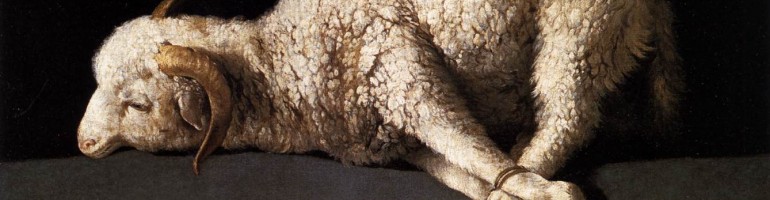
The blood of flawless sacrificed animals (living souls) prophetically represented the sinless soul of the Lamb of God, slain and risen from the dead by the covenant-fulfilling righteousness of God, through the power of the regenerating Spirit that gives everlasting life and hence can heal, make wholesome, and cleanse from sin as well.  That’s why the Levitical priesthood had so many ritual uses for sacrificial blood—to dedicate places, consecrate objects, sanctify people, heal lepers, cleanse from sin, etc.  But these uses were all based on the truly innocent blood (that is, sinless life, soul, or existence) of Jesus, which, when it was brutally shed, called forth God’s overcompensating justice to award him damages of cosmic magnitude, of which the Wholesome Spirit of life is pre-eminent.  When Christ’s blood is said to be sprinkled on our heart because we trust his Proclamation, it provokes God’s just restitution to send us the same Spirit of power that raised him from the dead, along with special signs following as visible phenomena attesting outwardly the new creation God has inwardly initiated in the core of our personality.  God graciously gives these extraordinary manifestations as official testimonies to endorse His message of inner release from the addictive grip of sin.  Jesus bore with aggravated sins, and by those lashes others get healed by virtue of the generous compensation that God’s justice dictates.  In brief:  sacrificial blood always depicts resurrection life, along with its extraordinary saving powers; it is the Old Testament symbol of resurrection from the dead!  Get it?

Leave a comment

Filed under justification, restorative justice, The Atonement

Jesus’ Resurrection Unmasked Official Corruption While Glorifying His Lordship

We might have expected the chief priests of Israel to fall on their faces repentantly in sackcloth and ashes after learning the News from the Roman detail appointed to secure the tomb where Jesus was laid, to the effect that superhuman beings had appeared and raided the tomb in open defiance of Roman law and might, while the crucified corpse walked out alive in shattering light!  Why in Heaven’s name didn’t those chief priests instantly collapse, reduced to remorse and anguish, mourning the staggering revelation that, after all, they had indeed murdered their own Messiah!  (Lk. 27:62-66, 28:11-15)  For now they knew without question that God Himself and not mere human power had sprung their death trap!  Or did they not recognize the truth because their concept of Israel’s God was so mangled that they fully expected if Jesus were actually the Messiah, then God’s vengeance upon them would surely have been wreaked in some more obviously destructive way than “merely” by resurrecting their victim?  In other words, did such mercy seem so inconceivable an attribute of the God they thought they were worshipping that they completely mistook his real identity and character when he actually did “bare his mighty arm” and, lo!, superabundant, overwhelming favor materialized before their eyes?  Something on this order, it seems to me, must be invoked to explain their incorrigible blindness and recalcitrant viciousness.  They got calloused by degrees until they were, at length, casehardened against the most stupendous sign God ever gave Israel!  [11/30/97]

Christ Jesus, the risen Lord, gives time a new lease on life.  Rather than eclipsing time by the advent of a mythical “eternity” (aidiotes), a word appearing in neither the Greek Old Testament (the Septuagint–much less in the Hebrew!) or the New Testament, God’s Messiah liberates His creation from the signs of decay by which we commonly mark time’s effects on created things.  It is time cleansed of corruption that will characterize the impending ages of the cosmos.  [12/21/97]

Tongues of fire at Pentecost are symbolic of God’s witness to faith as an “acceptable sacrifice,” as in many O.T. instances of fire falling from heaven to consume a sacrifice offered in faith.  That coming–“falling“!–of the Holy Spirit was God’s own testimony to the acceptability of trust in Jesus as Jehovah’s Salvation.  [01/15/98]

The difference between the Resurrection of Jesus from the dead and the resurrection of others mentioned in Scripture (the son of the widow of Nain in Elisha’s day, the servant of the centurion, the widow’s son, Lazarus, the resurrections of some saints after Jesus’ Resurrection, et al) is that Jesus’ own was followed by glorification at his ascension, while that of the others was not.  So we should distinguish these events carefully.  At the “general” resurrection to come, before Messiah’s judgment of all nations, Scripture seems to indicate that none are glorified.  But after the Judgment the lost will be thrown into the Lake of Fire and the saved will be glorified for agelong life.  [01/31/98]

Leave a comment

Filed under The Atonement

Signs & Wonders: Proofs of Our Proclamation concerning God’s Coming Kingdom

Before the disruption of the world by sin, the Father had chosen His Son as the inheritor of the universe.  God’s Explanation of this agelong favor upon His Son and, through him, upon anyone else who simply trusts, is the Divinely chosen means to call people back to Himself.  However, human minds have become so blinded by sin (their own and others’ done against them) and lust and corruption that God appointed the demonstrative power of signs and miracles of His Wholesome Spirit to accompany the Proclamation of His Kingdom inheritance.  The Spirit is, in fact, the very pledge and solid foretaste of that future inheritance.  These signs, miracles, and powers, by causing amazement, astonishment, and awe, draw jaded human attention back to the light and glory (“proof”) of the Truth, triggering repentance.

The historic Resurrection of Jesus, the Christ and Son of God, is the supreme proof of the Proclamation of God’s Kingdom, of which the powerful personal experience of immersion in Wholesome Spirit is intended to be the continuing, tangible, visible seal on earth.  Christ’s Resurrection is the supreme historic unveiling of God’s overcompensating justice.  The agelong life that was thereby bestowed on him was the rightful award of his unjust suffering of abuse.  This justification of Jesus via Resurrection, bestowing upon him transcendent, superabundant favor after favor, ipso facto justified God Himself–theologians call such a justification a “theodicy”–in His judgments toward humanity, and also thereby justifies the sinner who believes the Announcement of Christ’s Resurrection.  In fact, God regards such trust as justice, not because of any medieval dogma about a “transfer of merits” or “imputation of sins,” but because human trust accords with Divine favor and is generated by the inherent persuasive power of the true narrative about God’s miraculous endorsement and certification of Jesus to be Messiah and rightful Covenant heir.  [4/17/97

Consider carefully the ways in which Jesus before his baptism was like Adam before his sinning.  Jesus had to learn obedience from that which he suffered throughout his life.  Where Adam at length failed, Jesus continuously succeeded, being anointed as the Messiah at his baptism by John.  He was tried thereafter and triumphed yet again, proceeding on to his appointed ministry with great power and spirit of wholesomeness.  Yet again he was tested, this time supremely, in the Garden of Gethsemane, even up to the very moment of death…but won the victory of faith that secured even our salvation, much less his own–for, yes, Jesus was himself “saved” from death and the unseen–by God’s raising him to agelong life.  [4/22/97]

Jesus says, in effect, “Let’s make a deal.  I’ll die for your sake; you live for my sake.  I’ll give up my kingship over the nation of Israel now so that all nations can then enter my Father’s universal Kingdom without impediment.  Deal?”  [5/15/97]  This, however, cannot be construed as a so-called “substitutionary” exchange since Jesus did not die under a Divine penalty, or as some sort of even exchange of just so much pain for just so much gain, but entirely in the favor of God, thereby winning an incomparable reward instead.  This fact takes all the wind out of the word “substitute,” so we may then fall back on the sound key terms the Wholesome Spirit has selected in Wholesome Scripture for our authentic sanctification (being ourselves rendered wholesome).  [7/07/07]

Leave a comment

Filed under justification, restorative justice, The Atonement