God’s stated goal for His adopted children is not “deification” or “divinization” à la the Eastern Orthodox tradition, for even the Old Testament declaration, “You are gods,” is not a goal but a present fact. Small comfort! Our race of sinful gods is under condemnation by the Most High, and we, notice, are mortal (Psalm 82:6).
No, no! Far from mere “divinity,” God’s aim for His daughters, sons, and future heirs is…God-likeness, i.e., “Godliness,” or, in more concrete and tangible terms, “Christ-likeness,” for Jesus is the visual image and verbal explanation of Jehovah, the Lord God in the flesh for our salvation. We approach this glorious goal of God’s image and likeness by “participation in the deitic/theotic nature” (2 Peter 1:4). How is that achieved? By God’s own “deitic/theotic power” (2 Peter 1:3) of the Wholesome Spirit, which is poured out on all who recognize through the Proclamation of the Kingdom that Jesus is Master, is Jehovah, and who avow him to be so with trust in their hearts (Romans 10:9-10), they are thereby immersed into Messiah and attain the status of “members” of his body. Consequently we are “destined” to “wear the image of the celestial” (Romans 8:29-30, 1 Corinthians 15:49). God’s Spiritual power of wholesomeness “tends toward life and devoutness” (2 Peter 1:3).
Hence Peter, without losing his stride, proceeds immediately to urge, “Now for this same thing also” (i.e., participation in the deitic/theotic nature by fleeing from the corruption which is in the world in lust, covetousness, or cravings of our as-yet-unliberated mortal flesh), and “employing all diligence, in your faith supply virtue, yet in virtue knowledge, yet in knowledge self-control, yet in self-control endurance, yet in endurance devoutness,”—the same devoutness toward which “theotic power” tends, in order to realize God’s “theotic nature” within believers—“yet in devoutness brotherly fondness, yet in brotherly fondness, love” (1 Peter 1:5-7). Bingo! This is Peter’s version of Paul’s list of fruits of the Spirit. Such quality products constitute the very “contents of Deity”—the stuffings of God’s own “graciousness and truth” that filled the “only-begotten/born from the Father,” who, being “in[to] the bosom of the Father,” gets His very nature “unfolded” before human eyes in living color, as it were (John 1:14-18). That’s why Peter goes on yet further to say, “For your possessing these [fruits of graciousness and truth] and increasing is constituting you not idle nor unfruitful in[to] the recognition of our Master, Jesus Messiah. For he in whom these [traits] are not present is blind, closing-his-eyes, getting oblivious of the penalties-of-his-sins of old” (1 Peter 1:9). [7/26/07]
ROMANS 3:3-5, 24-26
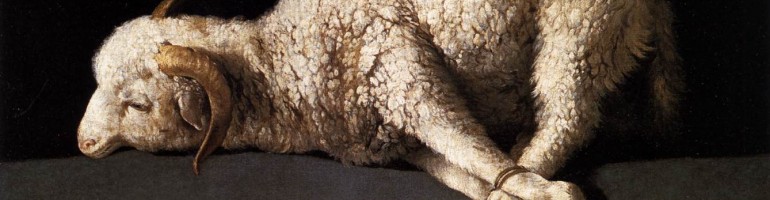
God’s rectitude was displayed in the former era of the Old Covenant by His Passover of the penalties-of-sins because of His forbearance; His rectitude is displayed in the current era of the New Covenant by His being just to Jesus and His justifying the one who is from the faithfulness of Jesus. For the faithfulness in his innocent, sinless blood was the very protection or indemnification (hilasterion) that God Himself savingly purposed for our liberation. And whereas in the earlier period the blood of cattle, sheep, and goats stood in for the real thing, after Jesus truly sinless blood was wrongfully shed, God actually answered from Heaven with the just award of life via resurrection from the dead! Thus the faithlessness of the Jews did not nullify the faithfulness of God to His covenant (Romans 3:3); in fact, their injustice commended God’s rectitude (Romans 3:5) such that He broke forth in judicial zeal to do justice to Jesus posthaste! Through the latter’s superabundant reward, we who trust the faithfulness of Jesus also receive graciousness from God beyond measure. Yet even so, His wrath justly abides on all who remain unyielding and unrepentant (Romans 3:5-6, John 3:36). [7/28/07]

 The Premial Atonement